
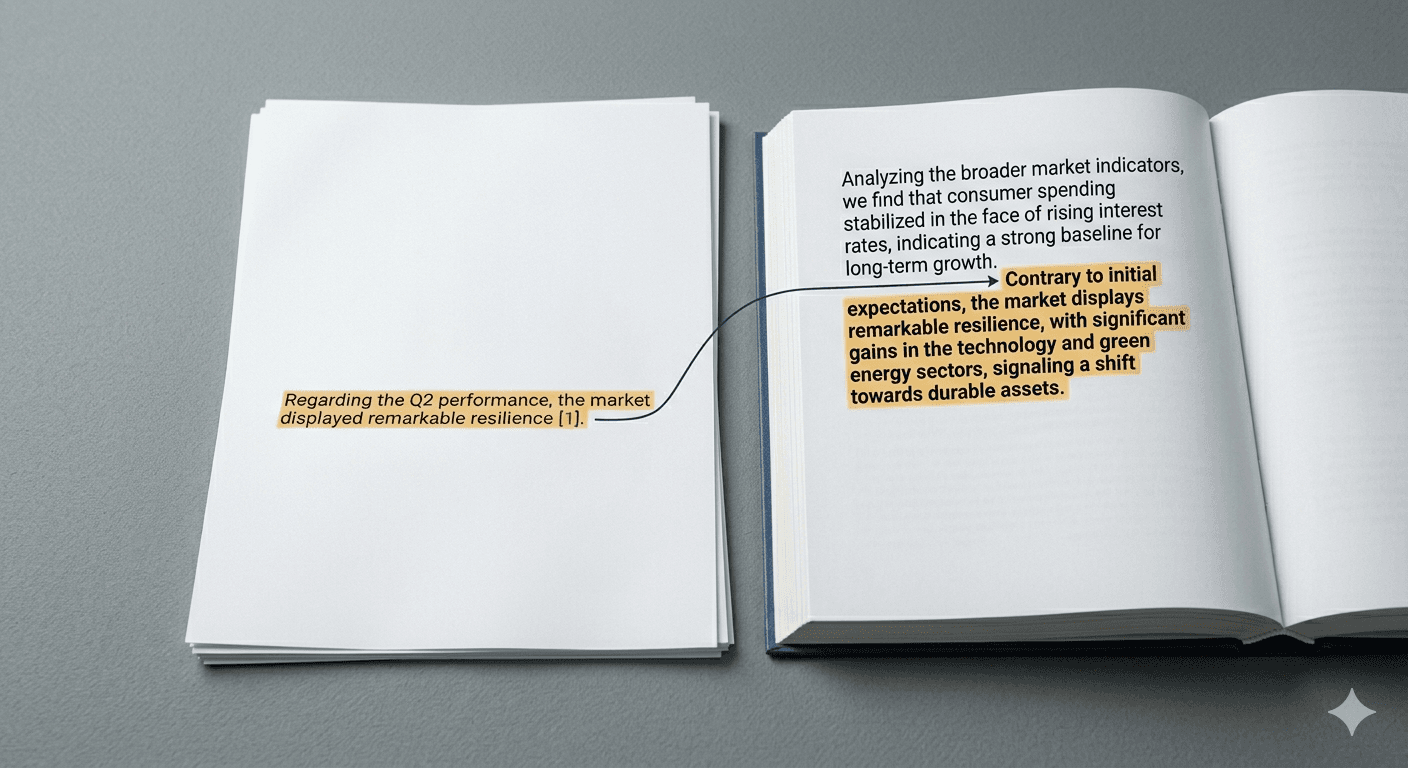
There is a quiet rule emerging across finance: an AI answer without a citation is not an answer worth using. The firms that have moved fastest into production have, almost without exception, settled on the same architectural commitment — every claim the model makes has to point at a page, a paragraph, or a row in a source document. Without that anchor, the answer is unverifiable; with it, the team can argue about the finding instead of the tool.
Why this is not a UX feature
It is tempting to treat citations as a polish item — something you bolt onto a working chatbot. In practice, source-grounding has to be designed in from the architecture out. The retrieval system has to chunk, index, and re-rank documents in ways that make citations possible at the page level. The model has to be constrained to answer only from retrieved context. The interface has to make the source a single click away from any sentence it produces. Each of these is a meaningful engineering decision, and they are difficult to retrofit.
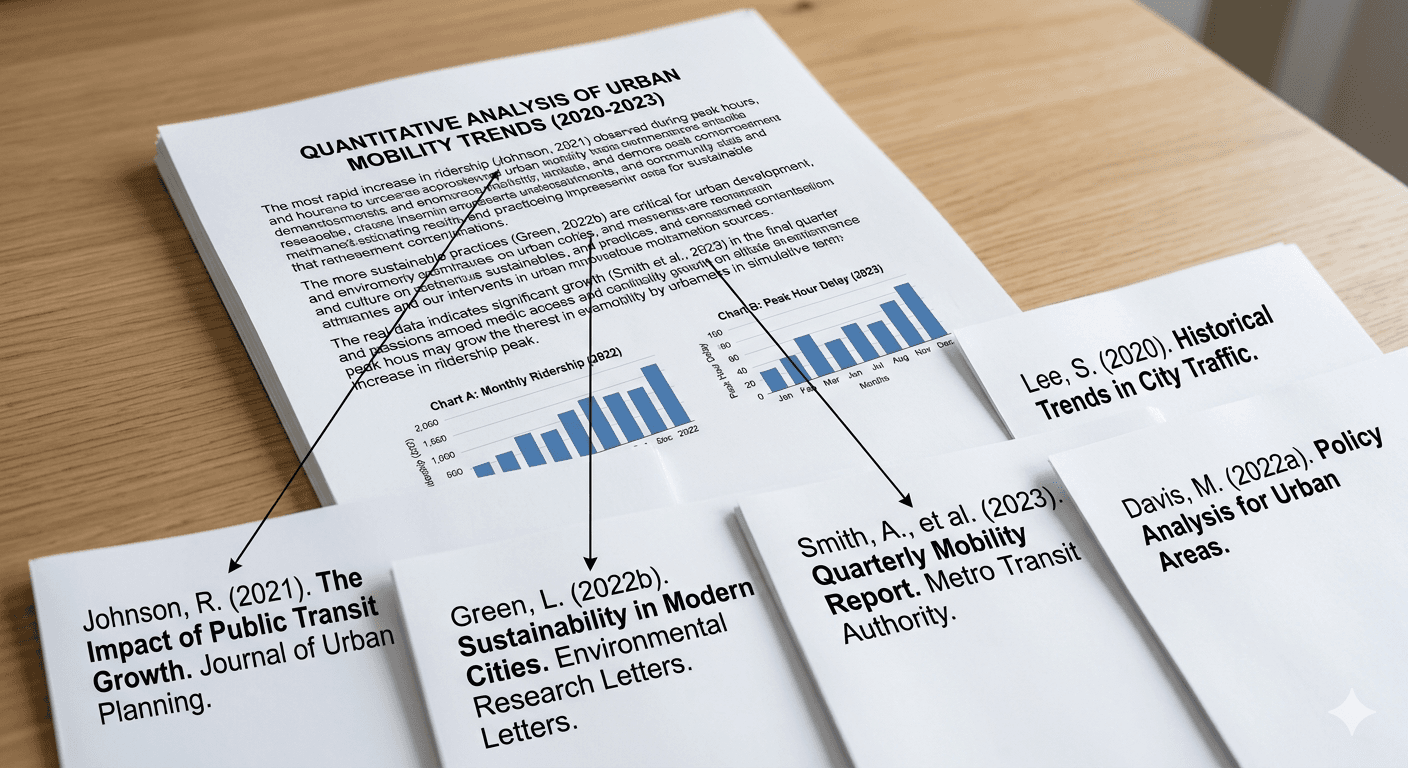
Verification is not a feature. It is the floor on which everything else stands.
The firms that adopt source-grounded AI for diligence stop describing it as artificial intelligence within a few months. It becomes, simply, a faster way to read the data room. The vocabulary of trust shifts back to the documents — which is exactly where it should sit.
For a tool intended to support consequential decisions, this is the only stable footing. Anything else asks the user to trust output for output's sake — and senior practitioners, rightly, will not.